
Engineering Asset Integrity & Predictive Lifecycle Management
Civil transport networks are subject to continuous environmental weathering, dynamic traffic loads, and material degradation. Managing these critical assets requires shifting from reactive repairs to predictive maintenance. Our comprehensive condition assessment services utilize advanced diagnostics, non-destructive testing (NDT), and structural health modeling to evaluate the exact structural health of roads and bridges.
By identifying subsurface flaws, concrete delamination, and pavement fatigue early, we provide asset owners with highly accurate data. This allows operators to optimize maintenance budgets, ensure public safety, and extend the operational lifespan of vital transport infrastructure.
Step-by-Step Asset Condition Assessment Workflow
Evaluating large-scale civil corridors requires a systematic, multi-phased diagnostic approach to accurately isolate structural defects without disrupting active transport flows:
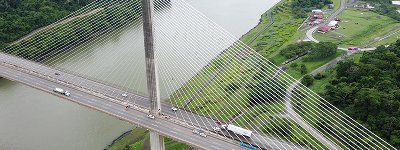
Phase 1: Desktop Study & Historical Data Audit
Reviewing original structural blueprints, construction material specifications, past maintenance logs, and historical traffic volume data to establish an operational baseline for the asset.

Phase 2: Routine & Close-Range Visual Inspection
Conducting rigorous physical walk-throughs and drone-assisted visual mapping to identify superficial defects like concrete cracking, exposed reinforcement, joint failures, and surface rutting.
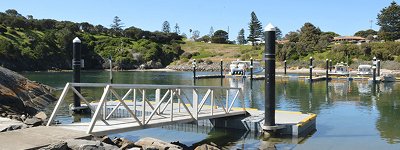
Phase 3: Non-Destructive Testing (NDT) & Subsurface Diagnostics
Deploying advanced penetration technologies, ultrasonic arrays, and electromagnetic scans to map interior structural health, detect voids, and measure subsurface material degradation.
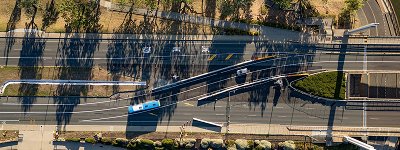
Phase 4: Structural Health Monitoring & Load Rating Analysis
Installing temporary or permanent sensor arrays to measure real-world dynamic deflections, vibration frequencies, and strain under active traffic weights, recalculating actual safe load capacities.

Phase 5: Predictive Modeling & Lifecycle Budgeting
Processing structural data through deterioration modeling software to forecast asset degradation rates, allowing engineers to prioritize interventions and estimate long-term capital expenditure.
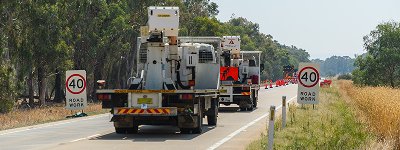
Phase 6: Comprehensive Remediation & Reporting Strategy
Compiling itemized structural health indexes, certified engineering reports, and tailored rehabilitation plans detailing specific concrete injections, cathodic protections, or pavement overlays.
Key Technical Diagnostic Methodologies
- Ground Penetrating Radar (GPR): High-frequency electromagnetic scanning of bridge decks and road pavements to locate internal voids, delamination, and moisture ingress.
- Falling Weight Deflectometer (FWD): Measuring pavement surface deflections under simulated heavy wheel loads to evaluate the structural structural capacity of underlying subgrade layers.
- Chloride & Carbonation Testing: Extracting concrete core dust samples to analyze chemical contamination levels that trigger rapid internal rebar corrosion.
- Laser Road Profilometry: Utilizing vehicle-mounted laser sensors to calculate the International Roughness Index (IRI), mapping macro-texture, rutting depths, and pavement smooth profiles.
Frequently Asked Questions
FAQ
Visual inspections identify superficial, visible surface defects. Condition assessments use non-destructive engineering technologies to mathematically evaluate hidden, subsurface structural integrity and load capacities.
Most international frameworks mandate routine visual checks every two years, combined with comprehensive structural health and load-rating verifications every five to ten years.
Yes. We deploy high-speed laser profilers and vehicle-mounted ground penetrating radar arrays capable of mapping road conditions at normal traffic speeds without closures.
We calculate active carbonation depths, measure residual rebar thickness via electromagnetic scanning, and run finite element models to forecast structural decay rates.
Packages contain certified structural health ratings, itemized defect GIS maps, calculation summaries for load-bearing capacities, and prioritized maintenance investment roadmaps.
Protect Your Transport Infrastructure Portfolio
Transition from costly emergency interventions to completely optimized, data-driven asset management. Partner with our senior engineering compliance team to secure precise structural verifications, mitigate operational risk, and safeguard your network’s long-term lifecycle performance.